线程池常用于高性能服务器中。为了减小线程创建、销毁时的开销,引入了池式结构。比如:内存池、数据库连接池等等。
学习线程池也只要是因为最近在学网络编程的东西。
线程池结构
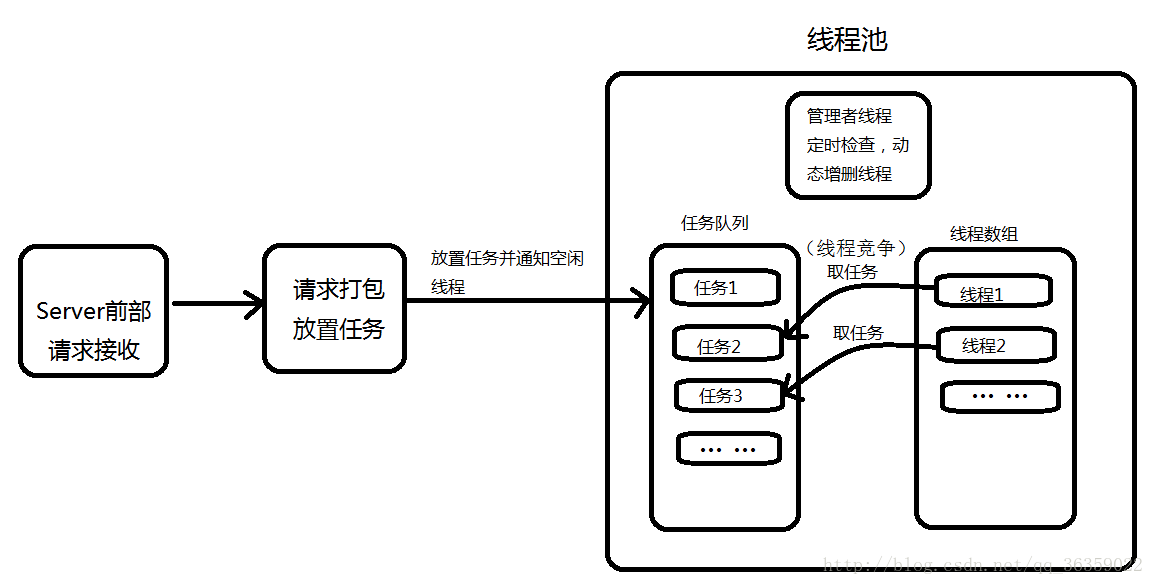
从上图可以看到线程池主要包括任务队列、线程数组、管理者线程。为了简单起见,没有加入管理者线程。
调用顺序
//TODO
线程池数据结构设计
线程池结构定义
主要包括线程池的一些属性。线程池状态信息、任务队列信息、互斥锁
1
2
3
4
5
6
7
8
9
10
11
12
13
| struct threadpool_t{
pthread_mutex_t lock;
pthread_cond_t notify;
pthread_t *threads;
threadpool_task_t *queue;
int thread_count;
int queue_size;
int head;
int tail;
int count;
int shutdown;
int started;
};
|
任务队列结构定义
可以放置多种不同任务函数的函数指针,参数为*void**型
1
2
3
4
5
| typedef struct
{
void (*function)(void *);
void *argument;
} threadpool_task_t;
|
其他一些枚举类型
错误码
1
2
3
4
5
6
7
8
| typedef enum
{
threadpool_invalid = -1,
threadpool_lock_failure = -2,
threadpool_queue_full = -3,
threadpool_shutdown = -4,
threadpool_thread_failure = -5
} threadpool_terror_t;
|
线程池关闭方式
1
2
3
4
| typedef enum {
immediate_shutdown = 1,
graceful_shutdown = 2
} threadpool_shutdown_t;
|
线程池销毁的枚举
1
2
3
4
| typedef enum
{
threadpool_graceful = 1
} threadpool_destroy_flags_t;
|
线程池API设计
线程池对外开放了三个API:
1
2
3
4
5
6
7
8
9
10
11
12
13
14
15
16
17
18
19
20
21
22
23
24
25
26
27
28
|
threadpool_t *threadpool_create(int thread_count, int queue_size, int flags);
int threadpool_add(threadpool_t *pool, void (*routine)(void *),void *arg, int flags);
int threadpool_destroy(threadpool_t *pool, int flags);
|
此外还有一个工作线程未对外开放:
1
| static void *threadpool_thread(void *threadpool);
|
为了避免内存越界:
1
| int threadpool_free(threadpool_t *pool);
|
创建线程池
创建和运行线程池
1
2
3
4
5
6
7
8
9
10
11
12
13
14
15
16
17
18
19
20
21
22
23
24
25
26
27
28
29
30
31
32
33
34
35
36
37
38
39
40
41
42
43
44
45
46
47
48
49
50
51
52
53
54
55
56
57
| threadpool_t *threadpool_create(int thread_count, int queue_size, int flags)
{
if (thread_count <= 0 || thread_count > MAX_THREADS ||
queue_size <= 0 || queue_size > MAX_QUEUE)
{
return NULL;
}
threadpool_t *pool;
if ((pool = (threadpool_t *)malloc(sizeof(threadpool_t))) == NULL)
{
goto err;
}
pool->thread_count = 0;
pool->queue_size = queue_size;
pool->head = pool->tail = pool->count = 0;
pool->shutdown = pool->started = 0;
pool->threads = (pthread_t *)malloc(sizeof(pthread_t) * thread_count);
pool->queue = (threadpool_task_t *)malloc(sizeof(threadpool_task_t) * queue_size);
if ((pthread_mutex_init(&pool->lock, NULL) != 0) ||
(pthread_cond_init(&pool->notify, NULL) != 0) ||
(pool->threads == NULL) || (pool->queue == NULL))
{
goto err;
}
for (size_t i = 0; i < thread_count; i++)
{
if (pthread_create(&pool->threads[i], NULL, threadpool_thread, (void *)pool) != 0)
{
threadpool_destroy(pool, 0);
return NULL;
}
pool->thread_count++;
pool->started++;
}
return pool;
err:
if (pool)
{
threadpool_free(pool);
}
return NULL;
}
|
添加任务到线程池
1
2
3
4
5
6
7
8
9
10
11
12
13
14
15
16
17
18
19
20
21
22
23
24
25
26
27
28
29
30
31
32
33
34
35
36
37
38
39
40
41
42
43
44
45
46
47
48
49
50
51
52
53
54
55
| int threadpool_add(threadpool_t *pool, void (*function)(void *), void *argument, int flags)
{
int err = 0;
int next;
if (pool == NULL || function == NULL)
{
return threadpool_invalid;
}
if (pthread_mutex_lock(&(pool->lock)) != 0)
{
return threadpool_lock_failure;
}
next = pool->tail + 1;
next = (next == pool->queue_size) ? 0 : next;
do
{
if (pool->count == pool->queue_size)
{
err = threadpool_queue_full;
break;
}
pool->queue[pool->tail].function = function;
pool->queue[pool->tail].argument = argument;
pool->tail = next;
pool->count += 1;
if (pthread_cond_signal(&(pool->notify)) != 0)
{
err = threadpool_lock_failure;
break;
}
} while (0);
if (pthread_mutex_unlock(&(pool->lock)) != 0)
{
err = threadpool_lock_failure;
}
return err;
}
|
线程池销毁
线程池的销毁比较简单。
1
2
3
4
5
6
7
8
9
10
11
12
13
14
15
16
17
18
19
20
21
22
23
24
25
26
27
28
29
30
31
32
33
34
35
36
37
38
39
40
41
42
43
44
45
46
47
48
| int threadpool_destroy(threadpool_t *pool, int flags)
{
int i, err = 0;
if (pool == NULL)
return threadpool_invalid;
if (pthread_mutex_lock(&(pool->lock)) != 0)
return threadpool_lock_failure;
do
{
if (pool->shutdown)
{
err = threadpool_shutdown;
break;
}
pool->shutdown = (flags & threadpool_graceful) ? graceful_shutdown : immediate_shutdown;
if ((pthread_cond_broadcast(&(pool->notify)) != 0) || (pthread_mutex_unlock(&(pool->lock)) != 0))
{
err = threadpool_lock_failure;
break;
}
for (size_t i = 0; i < pool->thread_count; i++)
{
if (pthread_join(pool->threads[i], NULL) != 0)
{
err = threadpool_thread_failure;
}
}
} while (0);
if (!err)
{
threadpool_free(pool);
}
return err;
}
|
释放互斥锁、条件变量等资源
1
2
3
4
5
6
7
8
9
10
11
12
13
14
15
16
17
18
19
20
21
22
| int threadpool_free(threadpool_t *pool)
{
if (pool == NULL || pool->started > 0)
{
return -1;
}
if (pool->threads)
{
free(pool->threads);
free(pool->queue);
pthread_mutex_lock(&(pool->lock));
pthread_mutex_destroy(&(pool->lock));
pthread_cond_destroy(&(pool->notify));
}
free(pool);
return 0;
}
|
工作线程
1
2
3
4
5
6
7
8
9
10
11
12
13
14
15
16
17
18
19
20
21
22
23
24
25
26
27
28
29
30
31
32
33
34
35
36
37
38
39
40
41
42
43
44
45
46
| static void *threadpool_thread(void *threadpool)
{
threadpool_t *pool = (threadpool_t *)threadpool;
threadpool_task_t task;
for (;;)
{
pthread_mutex_lock(&(pool->lock));
while ((pool->count == 0) && (!pool->shutdown))
{
pthread_cond_wait(&(pool->notify), &(pool->lock));
}
if ((pool->shutdown == immediate_shutdown) || ((pool->shutdown == graceful_shutdown) && (pool->count == 0)))
{
break;
}
task.function = pool->queue[pool->head].function;
task.argument = pool->queue[pool->head].argument;
pool->head += 1;
pool->head = (pool->head == pool->queue_size) ? 0 : pool->head;
pool->count -= 1;
pthread_mutex_unlock(&(pool->lock));
(*(task.function))(task.argument);
}
pool->started--;
pthread_mutex_unlock(&(pool->lock));
pthread_exit(NULL);
return NULL;
}
|
测试用例
1
2
3
4
5
6
7
8
9
10
11
12
13
14
15
16
17
18
19
20
21
22
23
24
25
26
27
28
29
30
31
32
33
34
35
36
37
38
39
40
41
42
43
44
45
46
47
48
49
50
51
52
53
54
55
| #include "threadpool.h"
#include <stdio.h>
#include <pthread.h>
#include <assert.h>
#include <unistd.h>
#define THREAD 32
#define QUEUE 256
int tasks = 0, done = 0;
pthread_mutex_t lock;
void dummy_task(void *arg)
{
usleep(10000);
pthread_mutex_lock(&lock);
done++;
pthread_mutex_unlock(&lock);
}
int main(int argc, char **argv)
{
threadpool_t *pool;
pthread_mutex_init(&lock, NULL);
assert((pool = threadpool_create(THREAD, QUEUE, 0)) != NULL);
fprintf(stderr, "Pool started with %d threads and queue size of %d\n", THREAD, QUEUE);
while (threadpool_add(pool, &dummy_task, NULL, 0) == 0)
{
pthread_mutex_lock(&lock);
tasks++;
pthread_mutex_unlock(&lock);
}
fprintf(stderr, "added %d tasks\n", tasks);
while ((tasks / 2) > done)
{
usleep(10000);
}
assert(threadpool_destroy(pool, 1) == 0);
fprintf(stderr, "did %d tasks\n", done);
return 0;
}
|
pthread库一些函数
创建线程
1
2
3
4
5
6
7
8
9
10
11
|
int pthread_create(pthread_t *thread,const pthread_attr_t *attr, void *(*start_routine)(void *),void *arg);
|
初始化互斥锁
1
| int pthread_mutex_init(pthread_mutex_t *__mutex, const pthread_mutexattr_t *__mutexattr)
|
初始化条件变量
1
| int pthread_cond_init(pthread_cond_t *__restrict__ __cond, const pthread_condattr_t *__restrict__ __cond_attr)
|
//TODO